What's With the Hat?
An explanation from the guy always wearing it.

I used to be a broke line cook. When you can barely pay your rent, the last thing you are thinking about is where you can buy a $2000 leather jacket. As cooks, we spend more than half the day in a uniform. It isn’t ideal to have your change of clothes be something extremely valuable or costly. However, if you want to feel human and socialize after a long shift, you have to have something to wear. This is New York City. Looking your best on the street is part of the culture.
How do you pull it off?
I am not writing this because I consider myself or want to be a fashion critic. (Although other than a few misses over the years, I think I’ve always been pretty put together). I’m writing because my look, particularly the hats I wear, are always a topic of conversation. People stop me on the street and want to know where they are from. They want to know who makes them.
“Is it a pork pie?”
“A fedora? Stingy brim?”
They ask why I wear them.
Most people I encounter love my hats. They are drawn to the hats because of their custom sensibilities and the way they sit on my head. As we all know, with love comes hate. There are trolls online that gleefully comment on the hat. Bros love to ask if they can try it on after they’ve had a few well tequila shots at the bar while their buds or their basic girlfriends snicker behind them. The hat creates its own line of attention. I’m ok with it.
The story of the hat and me as one came to life in this city but starts in another: Chicago.
Fashion and style has always been a big part of who I am. As a teenager in the 90’s in Chicago I dressed from what I saw on MTV. Flannels were in. Didn’t matter if you were Kurt Cobain or Nate Dogg. Then I discovered skateboarding and punk rock. Etnies shoes and skate tee’s that I ordered religiously from the CCS catalogues replaced low Doc Martins and flannels around the waist. Fast forward a year or two my friends and I watched the film KIDS, by Larry Clark for the first time. We dropped the punk rock look and moved on to a more “fresh” skater look. Underground hip hop replaced punk rock. Rawkus records replaced Dr. Strange records. Technics 1200 turntables became more popular as a hobby than skateboards. Everyone wore Guess Jeans, Polo Sport, Nautica, and obviously Tommy. I had a DKNY bubble goose coat. I scooped ice cream at Baskin-Robbins to support my wardrobe and vinyl collection.
I was still living at home so I had money to burn. I didn’t save a penny.
That all changed after high school. I was immediately off to culinary school. It was the year 2000. My “college years,” were upon me.


I brought my turntables and crates of vinyl with me to my dorm room and set them up on my desk. I was convinced I’d continue my deejaying career. That didn’t happen. Cooking school consumed me. I got exposed to the world of restaurants and kitchen culture. I was hooked. I started as an intern while in school at a prominent, chef owned Chicago restaurant. It was the first “ fine dining” restaurant I worked in. I made minimum wage. I was only eighteen so I was too young to go to bars.
I saved money and eventually got my first studio apartment in Rogers Park, the northernmost neighborhood in Chicago. I dressed the same as I did when I was in high school, although I started feeling I was outgrowing it. The 90’s felt dead and they were.
I graduated culinary school after two years. I became a paid line cook working the garde manger station at another reputable “fine dining restaurant.” I was still taking the red line commuting to and from Rogers Park. Still had the bubble coat, baggy jeans and Timberlands. Most of the year was cold and miserable, dirty, damp and snowy. I rode the bus and train everyday. I ate family meal at work because I was quite broke. Everything went to rent or utilities. No new records and certainly no new clothes.
When I finally turned twenty-one I started to spend time in bars. Lousy places. Sports bars or dives where the drinks were dirt cheap. I worked so much I didn’t meet any girls to date or people to hang out with. I was lonely. I didn’t fit in at the bars but I kept going out to combat the isolation. I got used to reading the words “insufficient funds” printed on that little receipt whenever I would try to make a withdrawal from the ATM. I dressed the same but I felt out of place. My style was in limbo. It didn’t matter too much because half the day I was in the kitchen. I didn’t ever bring a change of clothes to wear after a long cook’s shift.
If you ask me, the early aughts were a terrible time in fashion. I didn’t get it. Nightmares of post college grads wearing oversized untucked dress shirts and bad designer jeans. Gel in their hair. By the time I was living in Spain in 2004 I was influenced by the electro clash look that was capturing the youth from San Sebastián back to Chicago. Everyone had mullets so I had to have one. It was my last attempt at a hairstyle as I was beginning to lose my hair. I was twenty-two years old. I had a friend in San Sebastián who owned a salon and she did the best job she could lining me up on the sides while keeping whatever I had left on top interesting. In hindsight, it didn’t look terrible.
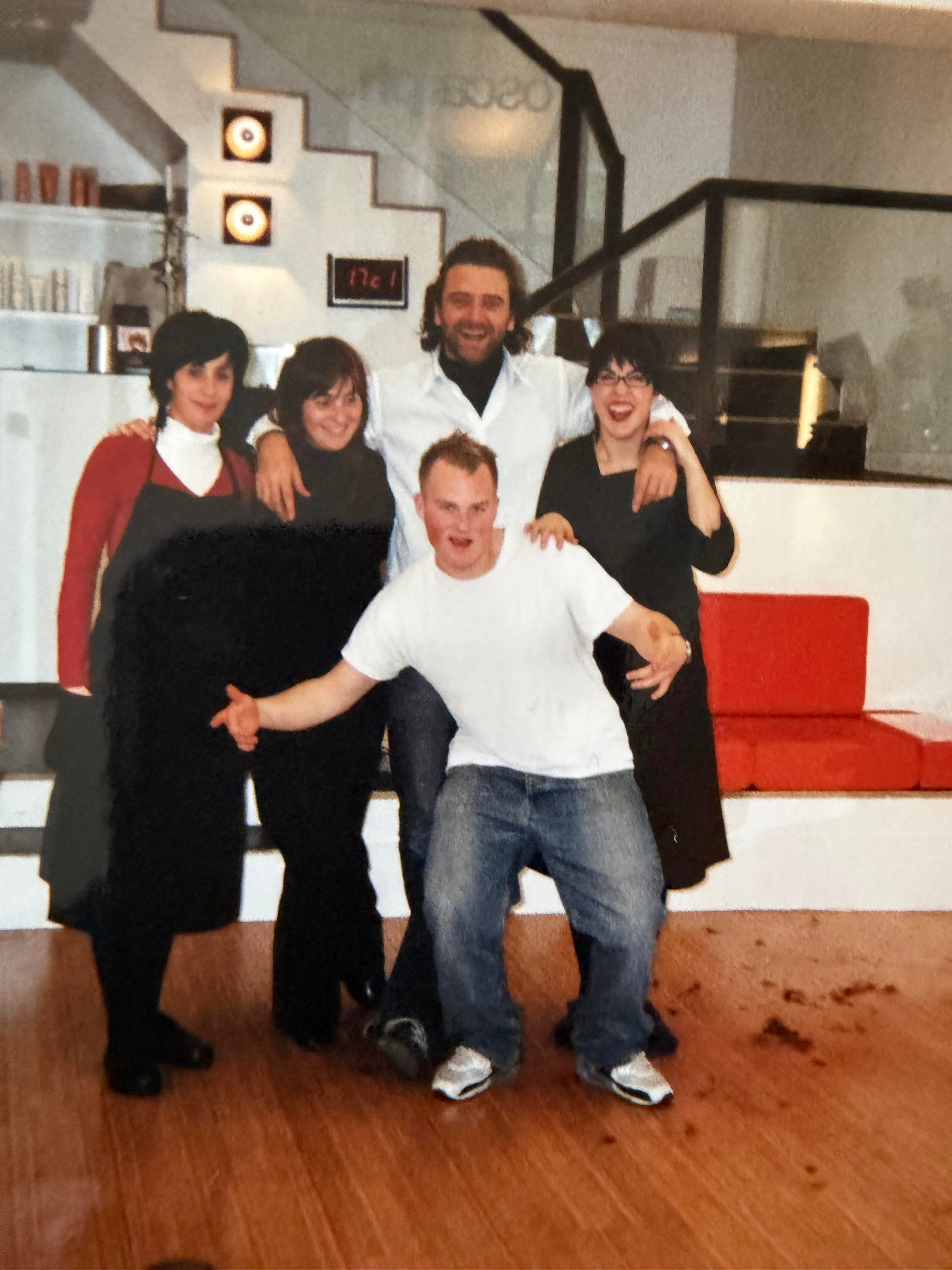
A year later, back in Chicago, I was still trying to figure myself out. I worked at Alinea. Electro clash was in full effect. Emo and indie sleaze were around. The jeans became tighter. I wore colorful paint splashed t-shirts from shops like Medusa’s Circle and Belmont Army Surplus. American Apparel stores started appearing everywhere. The clothes were cheap, and easy to get behind. Everyone was wearing it. Colorful and safe. It didn’t feel like me. I was looking for something else.
I moved to NYC in January of 2007. My first apartment was on Henry Street in what is now considered Two Bridges. Some would still call it The Lower East Side. The building I lived in was directly behind Ernesto’s.
The “apartment” was an 8 by 10 foot bedroom that I rented in a 100 year-old tenement loft. I locked the room every time I went to the bathroom. There were no sinks in the bathroom so I had to brush my teeth and wash my hands in the kitchen. There was one shower and one toilet for the fifteen people who lived in the space. I got very comfortable with the cockroaches and baby rats that scurried between the bedrooms but seldom saw my neighbors.
I didn’t care about the pests. I was young and living in Manhattan. I got a job cooking at a very highly anticipated restaurant that opened in West SoHo. It was a dream team of a crew in the kitchen and at the bar. The place spawned a lot of talent. Unfortunately, the restaurant was short-lived. A tough review from Frank Bruni and the 2008 recession put a strain on the business.
Once I started noticing my checks bounce and was told that I had to wait til next week to get paid, I knew it was time to get out. I was barely making any money to begin with when I was getting paid, so when I had $20 to last me two weeks I had to get creative. I’d fill up on dollar dumplings (5 for a buck!) If I really wanted to splurge I’d treat myself to lamb shawarma at Mamoun’s. I spent every waking moment I wasn’t working walking around downtown Manhattan, my new home. I made great friends immediately through my job but I met even more strolling my neighborhood.
On many occasions, after hanging out and speaking to people on the street and wanting to learn about who they were, we’d become friends. Sometimes instantly. A lot of these people were independent shop owners or bartenders. Before I knew it I had a network of friends that I could go see and hang out with during the day and at night. In the summer it’d be so hot on the concrete we’d take solace in a cool dark air-conditioned store. Many places were way out of my price range when it came to goods sold but as long as I could hang in the shops with my friends and drink beer, it didn’t matter.
One thing I noticed immediately walking around and hanging out was that everyone looked good. Including the people I was associating myself with. When I say good, I don’t necessarily mean just physically attractive, (yet everyone was) I mean they all had incredible style that reflected who they were and they all knew how to put themselves together to represent themselves.
I hadn’t figured myself out yet.
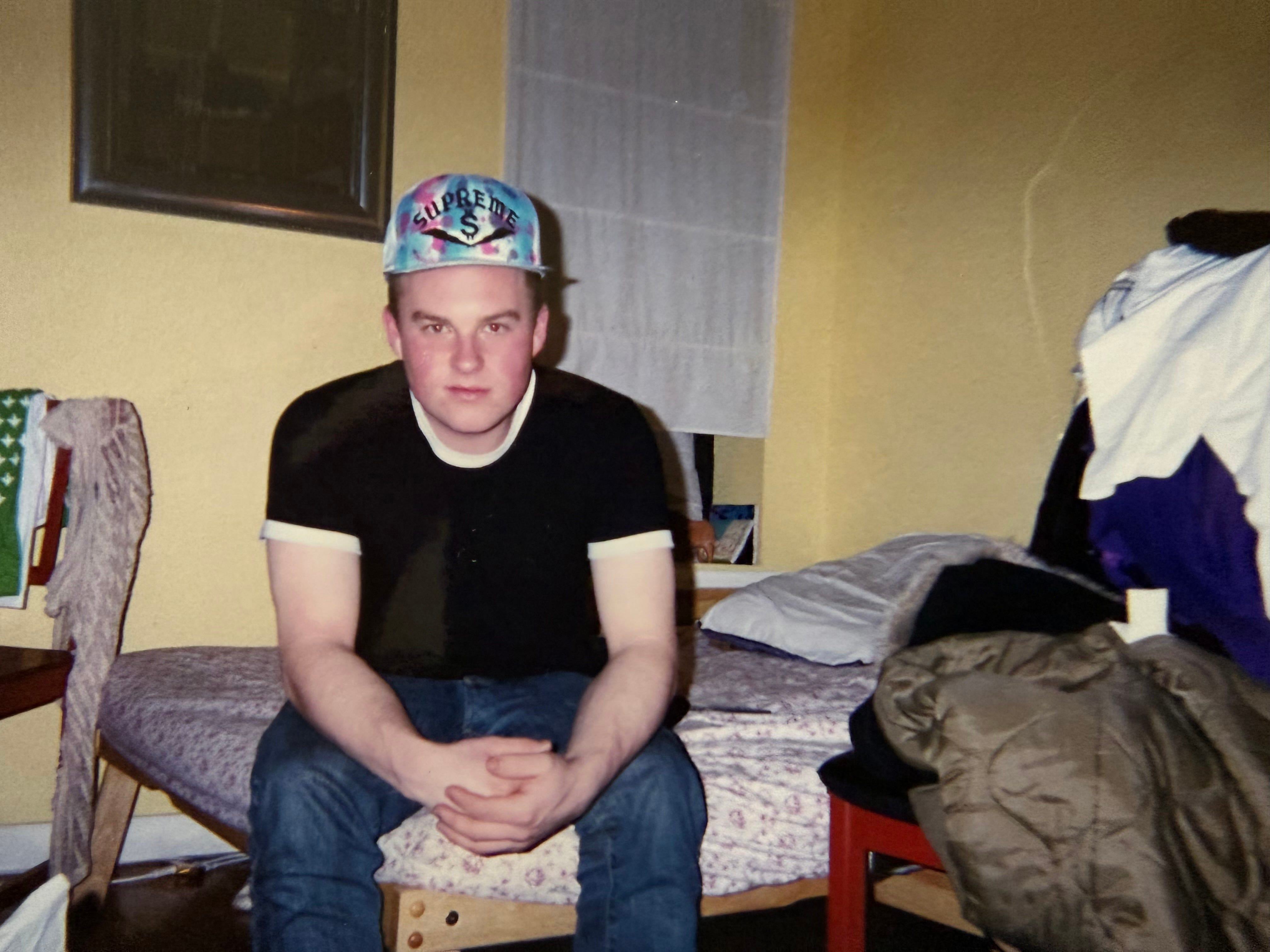
Emo was over and indie sleaze was still hanging around. The new era of NYC rock bands like Interpol, the Strokes, and the Yeah Yeah Yeah’s were influencing the way kids looked. The Misshapes parties were happening. Rock and Roll was back in, but I knew I could never look like Johnny Thunders or Keith Richards. I was more influenced style wise by Glenn Danzig, Ice-T, Lemmy, Mike Tyson, and the entire wardrobe of every cast member in Abel Ferrara’s cult classic King of New York. If I was going to be let in, or even noticed when I entered the Beatrice or Kenmare or Sway, I had to put myself together.
I had almost no hair. I started shaving my head with a straight razor. I wore hats on occasion but none of them looked good. That was until I went to Still Life. Still Life was one of the newish boutiques that existed on Orchard Street between Broome and Grand. Besides Still Life, the block had a few ancient garment stores that sold underwear or t-shirts. One restaurant existed, Cafe Katja, as well as one coffee shop, The Roasting Plant. Both places are still there to this day. You had to cross Delancey and get to Rivington if you wanted to see less remote activity.
The first time I walked past Still Life, I was captivated by what I saw. There was a pink neon sign on the glass window that read, “STILL LIFE.” Rows of perfectly crafted hats positioned in a tidy order. All looking beautiful. Different colors and sizes. Felt for the colder months and straw when the temperature hit the sixties. Some were fitted out with interesting feathers or pendants. I gravitated towards the stingy brims. The brims were less than two inches long. Some even less. I had to go in.
Upon entering I was introduced to two large slobbering pit bulls. The owner popped up from the back and assured me they were harmless. Other than the drool all over my pants, he was correct about his two big babies. The owner’s name was Frenel Morris. He was also the milliner and made all the hats himself with the occasional assistance of one or two other employees. We hit it off. I told him I needed a hat. I said I like his more than others because they are rooted in a classic style. Something you might see older people from the neighborhood wear, but the quality and the individualism of each piece was so bombastic. I wanted something super stingy. Like right out of the early sixties. He had it for me.
It was the stingiest thing I’d ever seen. Barely any brim. Dark blue straw with a tight band and a petite cardinal or almost vermilion colored feather. I tried it on. It fit like a glove. Considering I had no hair I needed a little hat. Something that would stay on and not fly away. It looked good though. Then he told me the price. Two hundred dollars doesn’t seem like much now but back then it was big budget. I asked him if he could hold it for me and he did. I told him I was good for it in a week. Once I got it I felt I could build my look around it. Black is the easiest color to wear with anything or anywhere so that is what I did. I focused on a black t-shirt, black jeans, black boots. The hat was the showpiece. The epitome of high low. Everything else I owned I bought from the underwear merchants. The LES used to be a thriving micro garment district, there were fast tailors all up and down Orchard and Ludlow. I could finally get jeans to fit me right.


Throughout the years I grew into a sort of muse for Frenel. I also became best friends with his younger brother, Chase. We hung out all day and went out all night in the LES. We stayed within a ten block radius of the neighborhood for a good two or three years. Other shops appeared and became a part of our realm. After the hat, I procured a leather vest and then jacket from another shop, The Cast, also owned by friends of mine. I had started to find my look. In the same way that I donned a uniform in the kitchen, I had a uniform for the life I was developing outside of it.
I’ve gone through about 15 to 20 hats over the years. With everything else, the life of a hat comes to an end from sustained use. Many paychecks have gone to the hats. Depending on the material, a hat can last anywhere from 2 to 5 years. On occasion, like a good leather jacket, they’re better broken in. I tend to be a nostalgic hoarder. I try to keep them around past their expiration but my wife does not allow it.
Still Life eventually closed and I went through a brief period of wearing and preserving the hats that were in better condition. Eventually, I was introduced, through my wife, to another milliner, Gigi Burris. She had come up in the fashion world with Frenel and understood what I was looking for. I trusted her to channel my style through her craft.
The hats also keep my head warm. I’m not a bald guy who is insecure about showing his head. When you have no hair, you get sweaty in the heat and cold in the winter. Might as well look good while you’re taking care of yourself. Most importantly, wearing my hat reminds me of where I came from, of not having much but still feeling like I had everything.
Hey Ryan. I don't know if you ever heard of a French-American Chef who worked in Seattle during the 80s and 90s. His restaurant was called Rovers. His first name is easy to spell, but his last name is a little tough. Thierry Rauterau? . He went by the nickname, “The Chef in the Hat”. He was a super fun guy to do the events with during that era. Unfortunately, he died much too young. I am sure that he would enjoy your essay here and raise a glass in camaraderie!
Loved this! Stingy Brim for life.